


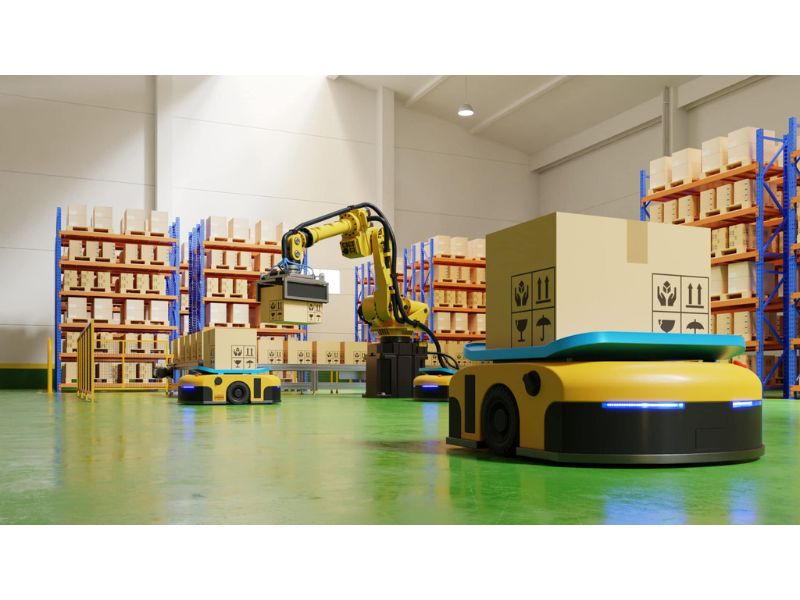
From new robotic launches to major partnerships and facility expansions, the materials handling sector continues to accelerate its shift toward smarter, faster, and more efficient automated operations.
Shanghai, November 20, 2025 – The global materials handling industry is witnessing rapid automation growth, with major brands unveiling new technologies, forming strategic alliances, and expanding their operational footprints. November brought a wave of innovations, equipment orders, and facility developments across North America, Europe, Asia, and Australia.
In November’s updates, Linde Material Handling introduced its Robotic Case Picker (RoCaP) at its Automation Summit in Germany. Designed for autonomous order picking, the RoCaP has already undergone successful trials with European drugstore chain Dirk Rossmann, demonstrating strong early performance.
Macrovey announced a new agreement with CaPow to integrate CaPow’s Power-in-Motion energy transfer system into its automation lineup. This move aims to extend battery life, eliminate operational downtime, and reduce the need for dedicated charging areas.
Jungheinrich’s subsidiary Storage Solutions strengthened its automation portfolio with the acquisition of Atlanta-based fulfilment specialist Invar. The purchase aligns with Jungheinrich’s Strategy 2030+ roadmap, which prioritises automation growth and further expansion into the United States market.
In the US, SK AX completed a major automation deployment at an auto parts production plant, rolling out unmanned forklifts and autonomous mobile robots to streamline logistics flow and boost efficiency.
Indian company Humro secured an INR 4.13 million (USD 466,000) order from a leading US-based logistics provider for its Atlas AC2000 autonomous forklift. The model underwent three months of successful testing at the client’s site before the order was finalised.
Dematic expanded its automated guided vehicle (AGV) line with the new reach truck series (RTS) 120, designed as a straightforward pathway for operations transitioning from manual reach trucks to automated solutions.
Automation also dominated CeMAT Asia in Shanghai, where a range of new robotic and automated products were showcased. Forkliftaction highlighted some of the standout technologies that captured attention at the event.
Looking back to October, several important developments shaped the sector. Dematic is prepared to deploy a greenfield automated intralogistics solution for CoolDrive Auto Parts, consolidating three locations into one highly automated site.
Kardex celebrated the opening of its new Australian office in Sydney’s Lidcombe Business Park, marking a strategic expansion in the region.
A new partnership between Robotize and Nord Modules led to the launch of the GoPal P35 autonomous mobile robot, capable of handling payloads from conveyors, lifters, and workstations with ease.
Exotec reached a major milestone with the deployment of its 10,000th Skypod robot. These robots have now completed more than 938 million cycles and saved over 90 million kilometres of walking for warehouse operators.
Industry news also included ABB’s decision to sell its robotics division to SoftBank for USD 5.38 billion, with the deal expected to close by mid to late 2026.
In Australia, Patrick Terminals ordered 14 hybrid automated straddle carriers from Kalmar for its Sydney AutoStrad terminal, adding to the 10 hybrid units purchased in 2020.
The new World Robotics 2025 Service Robots report by the International Federation of Robotics revealed that transportation and logistics now account for 52 percent of all professional-use service robots worldwide.
Other notable updates included Cyngn appointing Natalie Russell as its new chief financial officer, LiBiao Robotics opening a New Jersey office to support North American growth, and City Logistics partnering with Fortna to implement a high-performance handling and sorting system at its Johannesburg distribution centre.
With new technologies emerging rapidly and automation adoption accelerating across industries, the materials handling sector continues to evolve toward a more intelligent and efficient future.